Tigray: Systemic Omission Despite Humanitarian Structures
Von Timo Braun – veröffentlicht durch den Ethical Council of Humanity
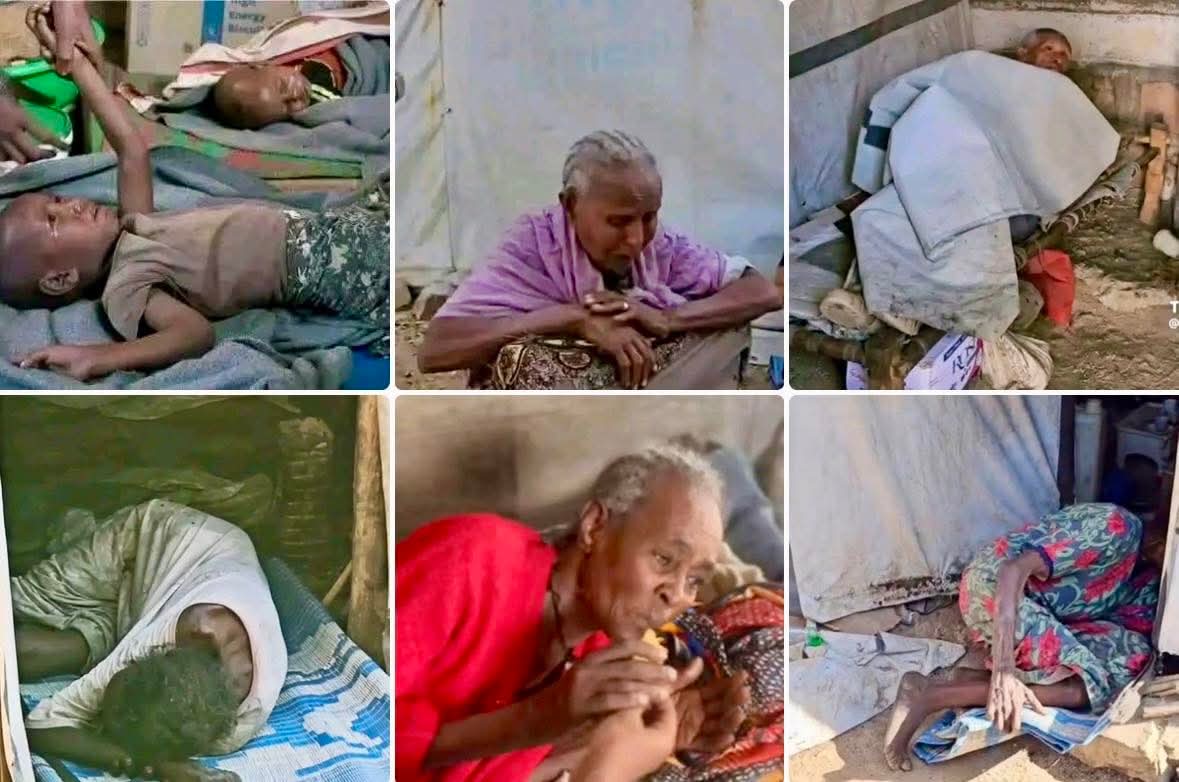
On 21 December 2025, a publicly accessible post was published on the platform X documenting an acute humanitarian escalation in the Ethiopian region of Tigray.1 The post reports that people have been without access to food, medical care, and humanitarian assistance for more than 20 days. Accompanying images show severe acute malnutrition (SAM) among children.
What is notable is the deliberate addressing of international institutions. This establishes public knowledge of the situation. The question is no longer whether the crisis is known, but what consequences follow from that knowledge.
1. Tigray since 2020: Displacement without Return
Since the outbreak of war in 2020, Tigray has been marked by large-scale destruction, persistent insecurity, and hundreds of thousands of internally displaced persons (IDPs). In particular, the area known as Western Tigray is still considered non-restorable. Return movements remain blocked.
As a result, not only housing and safety are missing, but also access to key agricultural land. Humanitarian aid replaces normality – and thus becomes essential for survival.
2. Formal Integration into the Humanitarian Architecture
Tigray is formally fully embedded in the international humanitarian system:
- UN OCHA (coordination)
- World Food Programme (food assistance)
- UNICEF (children, nutrition, water)
- World Health Organization (health systems)
On paper, this constitutes a dense network of assistance. In practice, however, the system is extremely fragile.
3. Real Bottlenecks in Supply
3.1 Access and Logistics
Tigray is landlocked and dependent on a limited number of supply corridors. Even short interruptions or delays at checkpoints lead to market shortages and sharp price increases.
3.2 Fuel
Without fuel, there is no distribution. Humanitarian actors repeatedly report that available aid cannot be delivered because transport and clinical operations come to a halt.
3.3 Financing
In 2025, the global funding crisis for humanitarian aid intensified dramatically. The World Food Programme was forced to partially suspend or reduce life-saving nutrition programmes in Ethiopia due to funding shortfalls.2 At the same time, UNICEF warned of shortages in therapeutic food for severely malnourished children.3
4. Visible Consequences
The documented images and reports show:
- severe acute malnutrition
- interruption of therapeutic treatment
- overwhelmed or non-functional supply structures
- IDP camps without adequate assistance
This development is not unexpected, but a predictable consequence of structural bottlenecks.
5. Meta-System Analysis: Why This Happens
Humanitarian aid is not an autonomous flow of life. It is dependent on authorization, access, and financing.
Those who control roads, fuel, budgets, and administration effectively control supply – without resorting to open violence.
It requires:
- no official siege order
- no declared hunger policy
It is sufficient:
- not to open access
- not to finance
- not to enforce delivery
The result is structural violence through omission.
6. Responsibility without Personalization
This article does not raise criminal allegations. It does, however, establish that:
- the situation is known
- the mechanisms are documented
- the risks have been foreseeable for years
If, despite this knowledge, no adequate action follows, this is not ignorance, but systemic omission.
Conclusion
Tigray is not starving because there is no aid. Tigray is starving because aid is not systemically enforced.
This is not an accident. It is a system outcome.
Footnotes
Public X post documenting the humanitarian escalation in Tigray, 21.12.2025: https://x.com/i/status/2002996185569841410 ↩
World Food Programme: warnings and programme suspensions in Ethiopia due to funding shortfalls, 2025. ↩
UNICEF: Humanitarian Action for Children 2025 – warnings regarding shortages of therapeutic food (RUTF). ↩